Four stores. One avatar. A closer look.
What our Zara, Aritzia, SSENSE and Depop image tests produced—and the details that changed along the way.
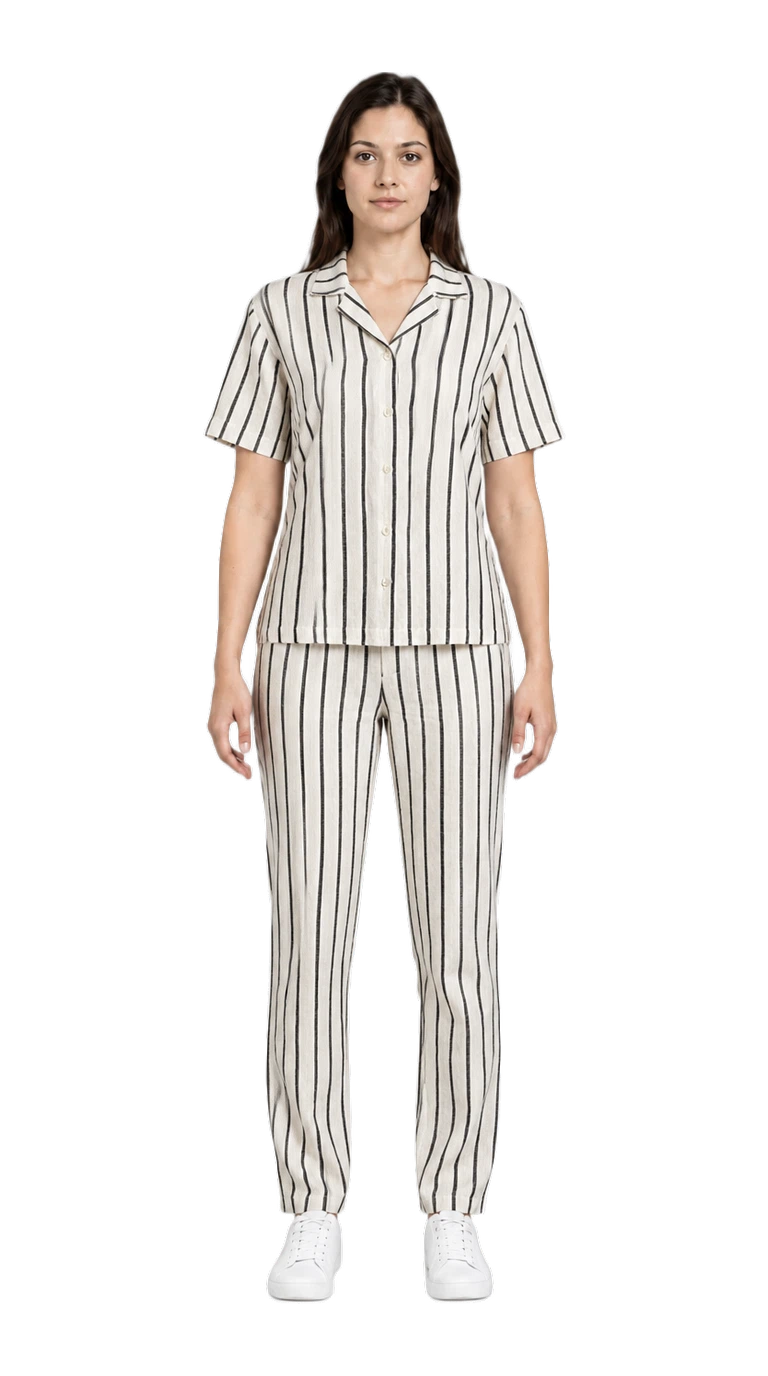
A useful try-on story should show the awkward parts as well as the attractive image. On October 12, we used one fictional adult reference to create a nista avatar, then tested clothing images from Zara, Aritzia, SSENSE and Depop through nista's production image-generation flow.
These were image-generation checks. We did not test the installed Chrome extension's button on those retailer pages, measure physical fit or establish a success rate across their catalogs. The person is synthetic; the selected results below are actual, unretouched nista outputs.
The same starting point
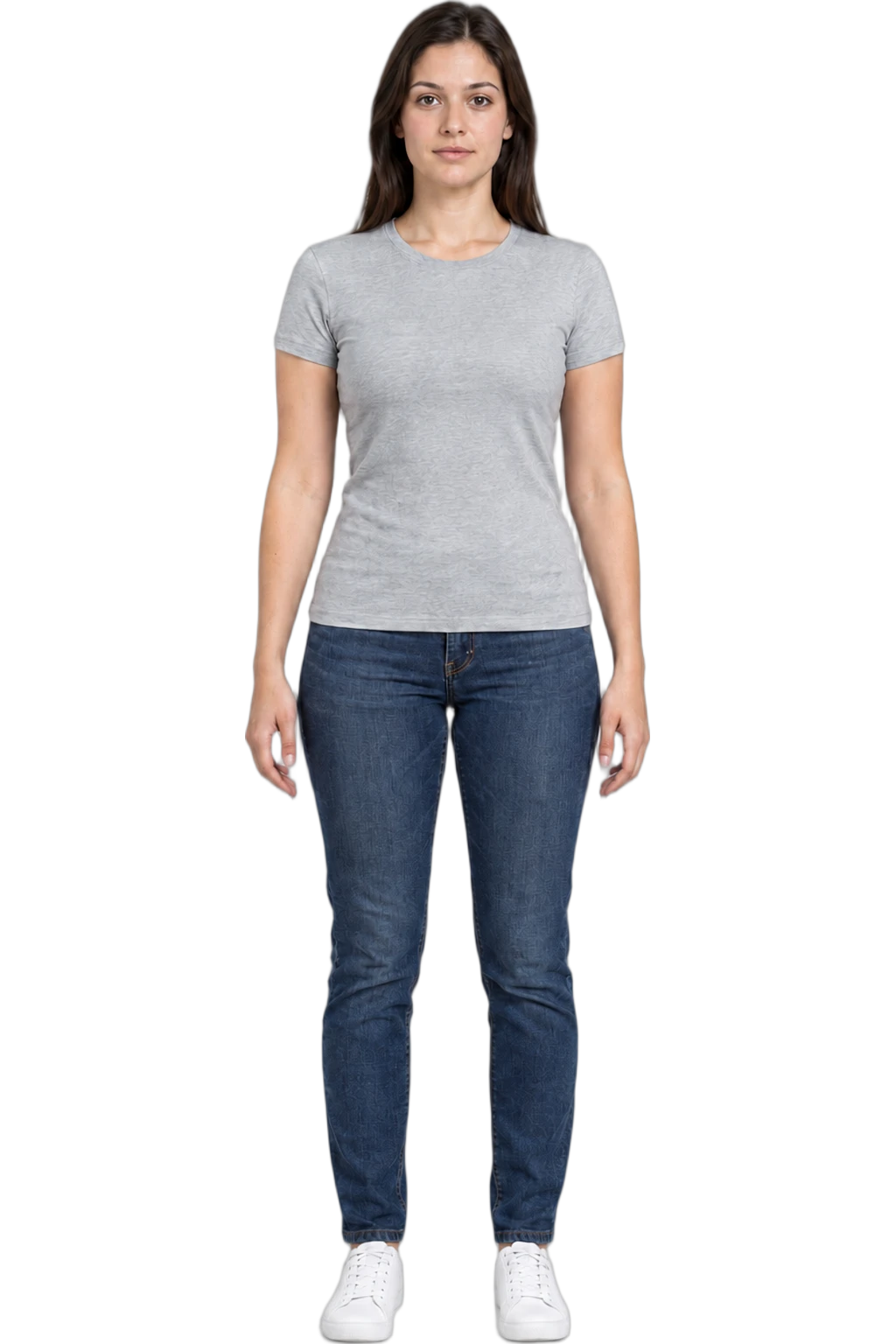
Using one reference made changes outside the requested garment easier to notice. Each request selected one clothing image or detected garment part. We did not ask for a complete new outfit.
Zara: a shirt became more than a shirt
The selected Textured Weave Shirt appeared in the accurate-profile result. The original jeans also became matching striped trousers. A viewer could easily read the image as a coordinated set, even though only the shirt was selected.
That is why we keep the original item close: a coherent-looking outfit can contain an unintended change. Read the Zara note.
Aritzia: an illustration with an unresolved comparison
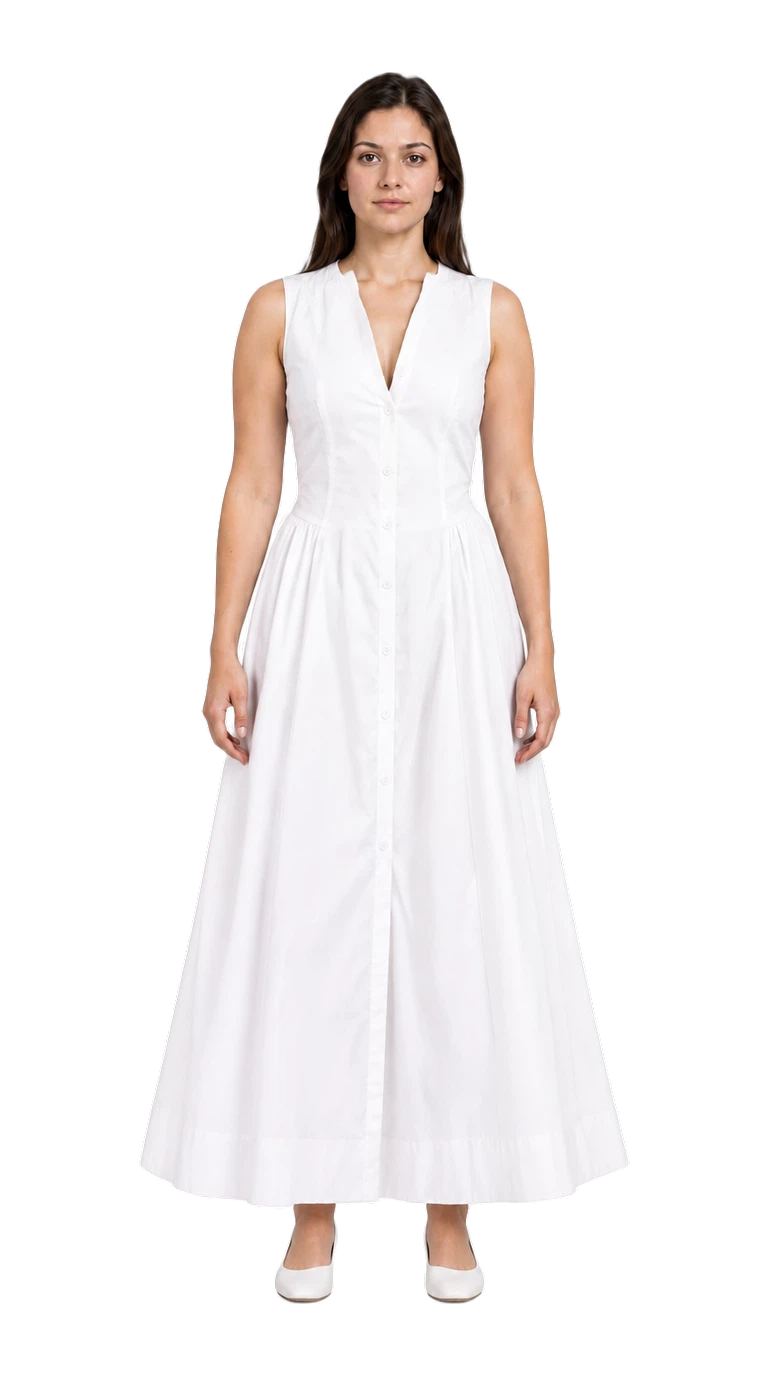
The Subtext Poplin Dress request produced a white sleeveless, button-front dress. The production flow accepted the source, but our local source download returned an access error. We therefore cannot call this a verified reproduction of the original garment's details. A separate hat test omitted the hat.
SSENSE: the underlayer came along
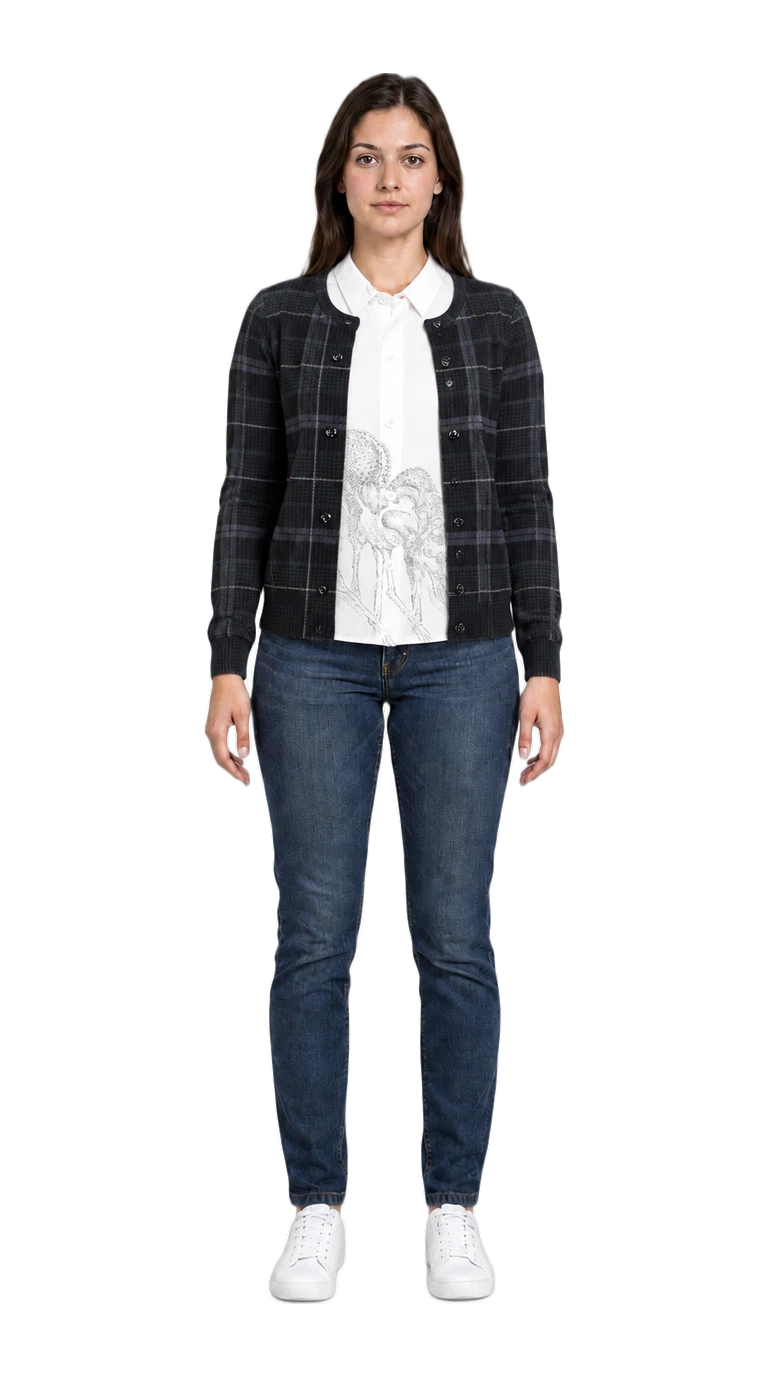
The accurate-profile result retained long sleeves, but also brought the source model's printed white underlayer into the image and changed the collar. A separate messenger-bag test duplicated the bag. Read what layered source photos can complicate.
Depop: a front view the source never showed
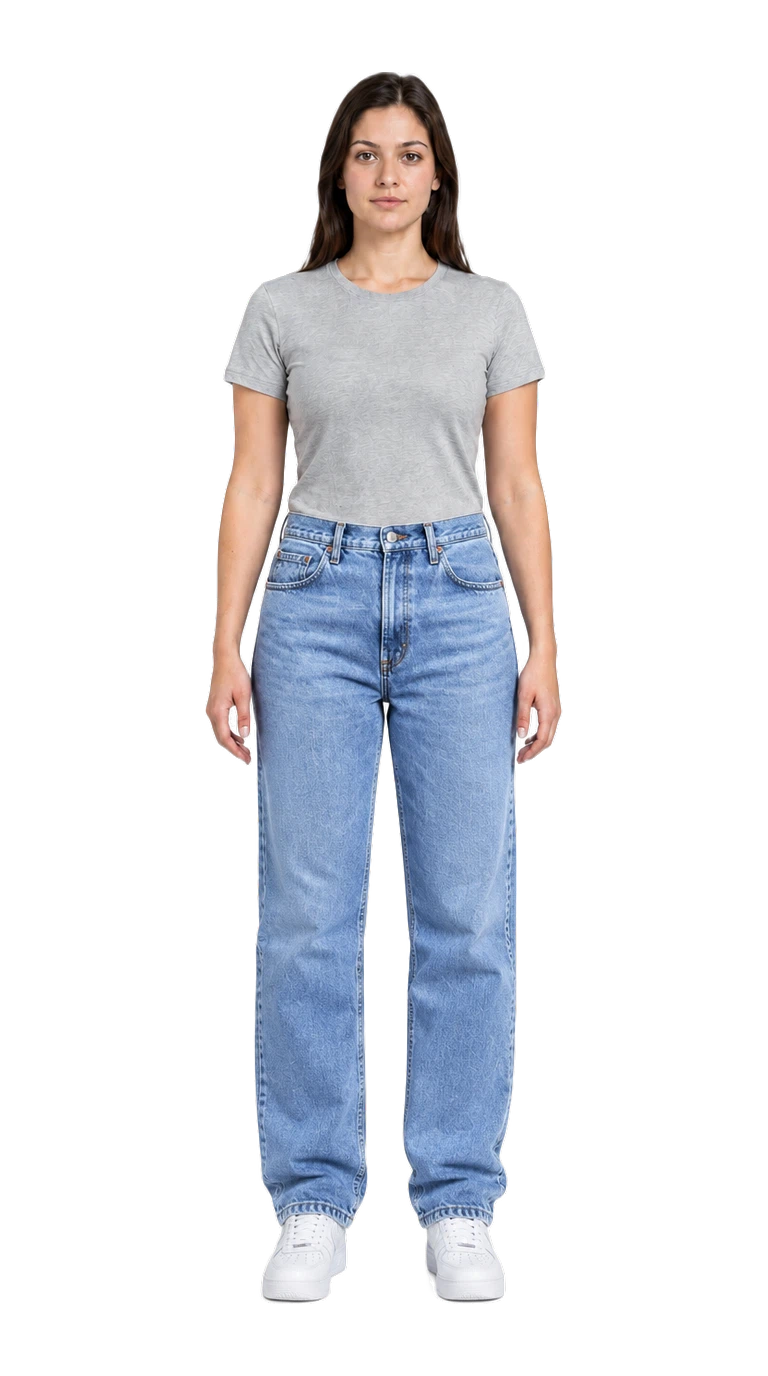
The vintage Levi's 505 input was a rear view. The accurate-profile result produced a plausible front, but plausibility does not establish the actual front pockets, fastening or wear. Read the secondhand-photo note.
What this means when you shop
Across the broader check there were nine completed requests, including the hat and bag examples. Completion meant an image was produced; it did not mean the image was correct. These selected examples are not a quality benchmark.
Use a preview to explore an appearance, compare it with the actual product photo and investigate any changed detail. Keep measurements, condition information and the seller's current terms in the decision. The four retailer guides explain the examples individually, and our accuracy guide sets out what a preview cannot establish.