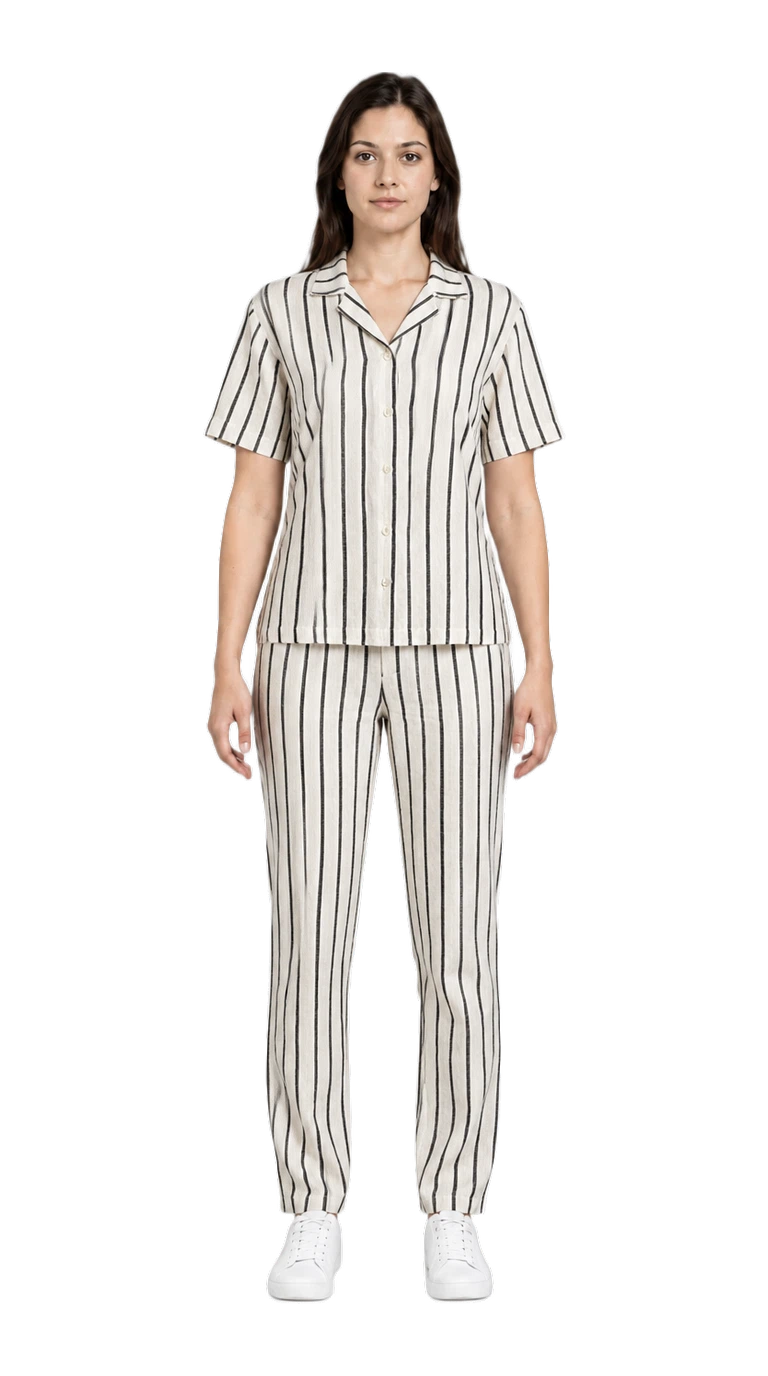
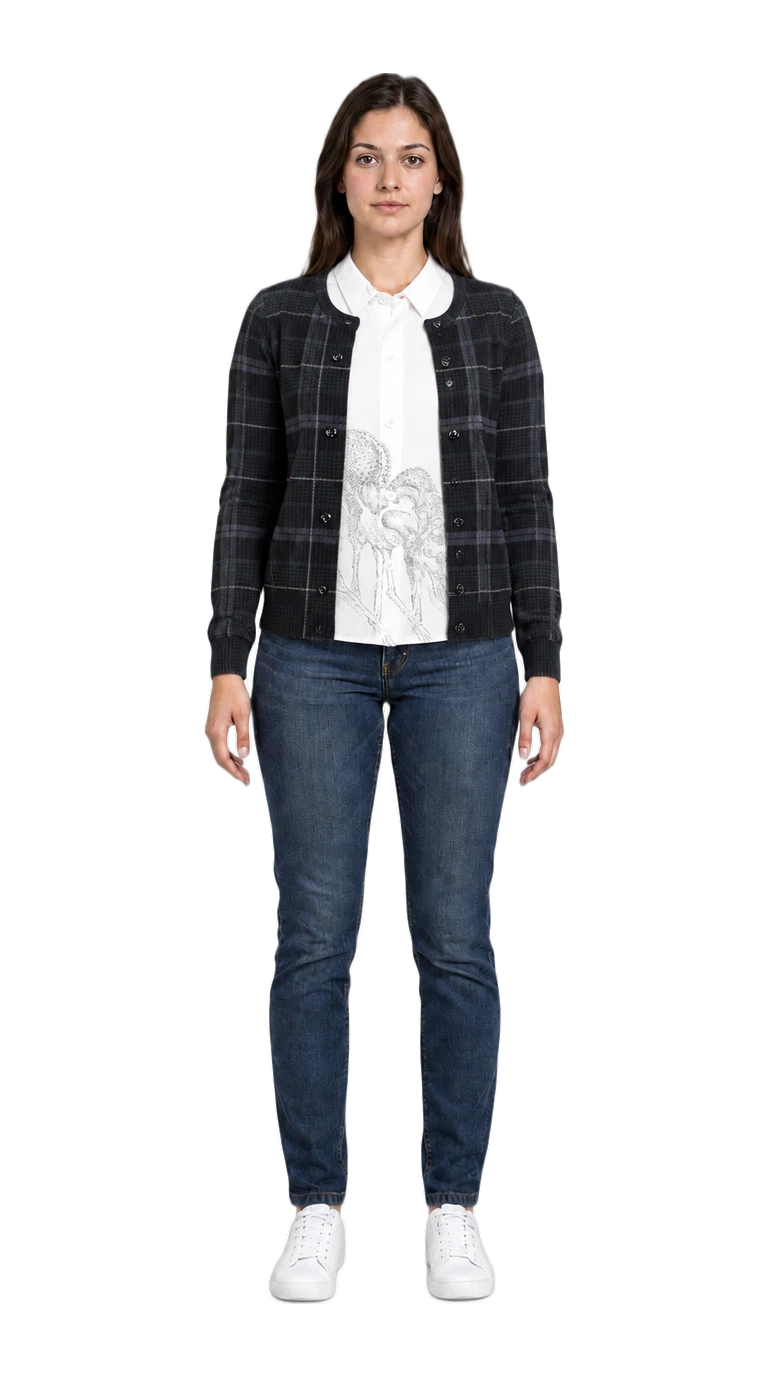
A white shirt is not one thing.
Start with collar, fabric, length and movement. A practical way to compare similar-looking shirts without buying by label alone.
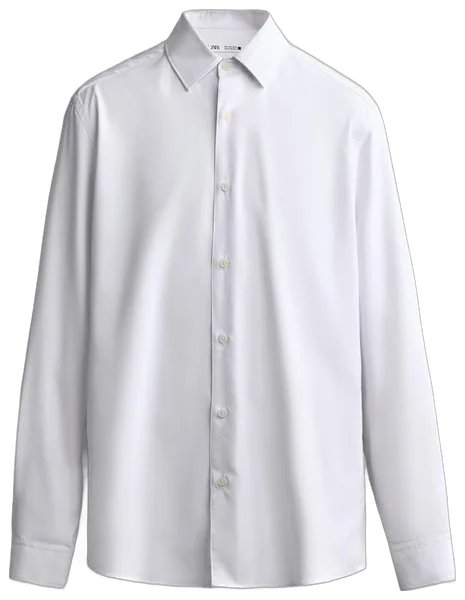
Two white shirts can look almost interchangeable in a shopping grid and behave quite differently in an outfit. One may be easy to tuck into trousers; another may work better as an open layer. The useful question is what you want the shirt to do.
Start with a shirt you already wear. Notice its shoulder placement, sleeve room and length, and identify what you would keep or change. That gives you a reference more specific than a label such as classic or essential.
Decide whether it is a top or a layer
If you want to wear the shirt buttoned, check the relevant garment dimensions and how the closure behaves when you sit or reach. If you want it open over another top, test the sleeve volume and shoulder movement with that layer underneath.
A larger labeled size may add room, but it can also change sleeve and body length. Compare the dimensions rather than assuming that sizing up is the only route to a relaxed shape. The fit answer collection explains how to keep body and garment measurements separate.
Look closely at what white hides on a screen
Lining, fabric weight and lighting affect what you can infer from a photograph. A studio image on a pale background may not resolve whether the shirt provides the coverage you want in daylight.
Ask about the specific garment if the listing leaves that unclear. Read the transparency checklist before treating an opaque-looking picture as proof.
Try a different texture, not just a different color
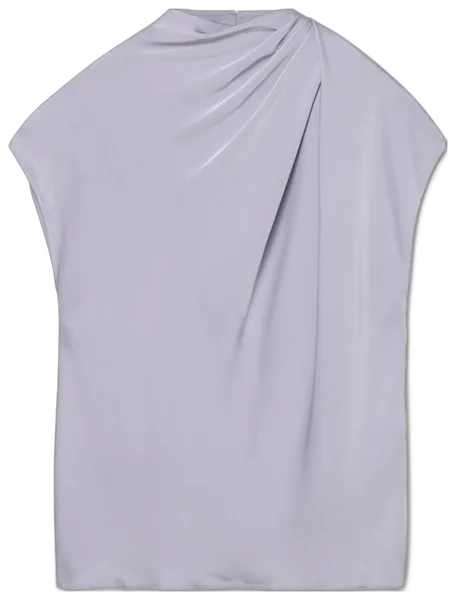
The lilac blouse above illustrates how construction can change the role of a top. Its neckline, sleeve shape and drape invite a different combination than the button-front shirt. You do not need to buy both to learn from the comparison: try similar contrasts with clothes you own.
Keep one variable fixed
Use the same trousers and shoes when comparing two tops. Then change the layer if that is part of the intended outfit. This helps you notice what the shirt itself contributes.
A nista preview can be another way to explore an appearance, but it may alter garment details and cannot establish comfort, transparency or precise fit. Compare it with the listing, and choose the shirt whose real construction fits the job you need it to do.